
Showing posts with label espionage. Show all posts

Chapter reveal: Corporate Citizen, by Gabriel Valjan


5-ccTitle
: Corporate Citizen: Roma Series Book Five
Genre: Mystery-Suspense/Thriller
Author: Gabriel Valjan
Publisher: Winter Goose Publishing
Purchase link:http://amzn.to/2b9E2qE
About the Book:
A call for help from an old friend lands Bianca and the crew back in Boston. On a timeout with Dante, due to revelations in the aftermath of the showdown in Naples, Bianca is drawn to a mysterious new ally who understands the traumas of her past, and has some very real trauma of his own. Murder, designer drugs, and a hacker named Magician challenge our team, and Bianca learns that leaving Rendition behind might be much harder than she thinks. 

Excerpt from Corporate Citizen (Roma Series Book 5)
    “Is this Mr. DiBello?” said a woman’s voice through the long-distance connection.
“This is he,” Gennaro answered.
Bianca raised her eyes at hearing him speaking in English. She had just come into the room with their afternoon drinks. She was even more concerned that the call had come to Gennaro’s cell phone and not the house phone. They were apartment sitting for their friend Claudio Ferrero,La Stampa’s top investigative journalist, who was on assignment. This call also threatened their afternoon ritual of talks out on the balcony where they enjoyed the sights below of San Salvario, the neighborhood near Turin’s city center. Gennaro was motioning for her to come over and eavesdrop.
“What can I do for you?” he asked the caller.
“Not for me, Mr. DiBello. I’m calling on behalf of your friend, Diego Clemente. He asked me to dial your number for him. It’s not easy dialing Italy from a hospital phone.”
“Hospital?” Gennaro said, alarmed. His eyes flashed his concern to Bianca.
“I’m a nurse at MGH and he’s my patient. MGH is Mass General–”
“Hospital in Boston,” Gennaro stammered. “I know that. Scusi – I mean I’m sorry for interrupting you, but is Diego alright?”
“He took a fall at home and broke his hip,” the woman seemed to sigh, “slip rugs are dangerous, you know. He can tell you the rest himself. There isn’t much time.”
“Wait, please. Much time?” Gennaro asked, confused. “I don’t understand.”
“He’s due for surgery and I’ve started his IV. I’d say that you have about ten minutes before happy hour.”
Gennaro said, not understanding to Bianca. “IV…and ‘happy hour.’”
Bianca bared her forearm and explained in Italian: “Medication; probably anesthesia.”
The voice on the phone said, “I’ll hand over the phone to him so you two can talk.”
“Thank you, Nurse.”
“You’re welcome.” Gennaro heard the phone shuffle and heavy breathing. The connection improved. Gennaro and Bianca heard the pull of the curtain. “Diego?”
Another moment passed, and more ruffling sounds. Gennaro and Bianca huddled closer around the phone as Clemente spoke, “Slip rug, col cazzo.” Clemente had learned some Italian, but only the choice words. “That’s some hell of a story, from Mason Street to MGH and now a hip-replacement. Jesus, I can feel the drug working its way up my arm already.”
“You’re making no sense, Diego.”
“Gennaro, please listen to me, since I don’t know how fast Nurse Ratched’s cocktail will work.”
“Less than ten minutes. I’m listening.”
“Thanks. My head feels light. Damn.”
“Wait — where’s your wife? You shouldn’t be alone in a hospital.”
“My wife passed away. Look, Virgil showed me the apartment, the dead girl, and it’s a real mess, a real setup, and my life is going to hell. To hell, you understand, Gennaro, in a boat, hole in the bottom, and toothpicks for oars.” The voice was Diego irritated, in hyper mode.
“Slow down, Diego. I’m sorry about your wife. Why didn’t you tell me?”
A deep, relaxed sigh. “I didn’t want to trouble you. What could you’ve done? Send me a Mass card? You’ve been through it yourself.”
Gennaro’e eyes turned downward. He remembered Lucia. “But still, Diego. I’m your friend. Friends do something, and I don’t mean send you the latest self-help manual on grief.”
Bianca swatted his arm, “No time for sarcasm,” she said.
“I couldn’t help myself, he told her in Italian.
“Hello? Help me then.” Diego
“First, I need to understand what you’re telling me,” Gennaro said. “Who is Virgil?”
“I wish I knew, Gennaro. I wish I knew. I think Virgil is one of Farese’s people.”
“Farese?” The name, as it came out of Gennaro’s mouth, made Bianca’s eyes widen.
U.S. Attorney Michael Farese was a chameleon of a character, changing colors when he worked for the Department of Justice, when he handled diplomatic requests for the State Department, and when he worked for the CIA, as they thought he might have been after their last run-in with him during their investigation of the Camorra in Naples.
“Diego? Concentrate. Why do you think Farese?”
“That doesn’t matter. She’s dead and he’s dead.”
“Who? Who is she? Who is he?” Gennaro asked. His voice almost cracked.
“Norma Jean. She had such nice lingerie, too, and that son of a bitch was in such a nice bed.” Clemente’s voice was almost singing as he was speaking. The wonders of pharmacology.
Gennaro rubbed his eyebrows. He was frustrated. “Diego, stay with me. Who is Norma Jean? Who was in the bed?”
“Marilyn Monroe was a sad girl.” Diego giggled.
“He’s giggling,” Gennaro said to Bianca.
“Oh, it’s a party line!” Diego almost shouted. “Who else is there?”
“Bianca,” Gennaro announced. “She is staying with me.”
“You naughty boy,” Diego said. “Put her on, please.”
“Here,” Gennaro handed his cell phone to Bianca. “Talk to him. I think the medication has gotten into his brain.”
Bianca seized the phone. “Clemente, this is Bianca,” she said, hoping that using the man’s last name would snap some momentary sense into the man’s head. “Forget about Marilyn Monroe. Who is dead?”
“Marilyn, of course. Somebody murdered her,” Diego answered.
“That’s right, but who is in the bed?”
“James Guild, former special agent, FBI, scourge of my loins.”
Bianca put her hand over the receiver and repeated, “Guild is dead.”
Porca puttana.” Gennaro stepped in closer to the receiver. “What happened, Diego?”
“Hell if I know. Virgil gave me the tour of hell. I got nice slippers, though. He had a needle in his arm.”
“Virgil had a needle in his arm?” Bianca asked.
Clemente became belligerent. “I just told you Guild had a needle in his arm. He was in that expensive bed. I saw it. No gun, too. Norma was out in the living room. He was in her bedroom. Nice bed, and what a nice view, and did I tell you what a beautiful kitchen she had?”
Gennaro asked, “I couldn’t hear that last part. What did he say?”
“Nice kitchen,” she said in English “He’s getting delirious.”
“I’m not delirious,” Clemente yelled. “I’m serious! Oh, that rhymes.”
“Please focus, Clemente,” Bianca said.
“I saw it. I saw the computer. My life, your life…it all goes to shit.”
Bianca, trying a soothing voice, said, “You saw a computer. What did you see, Clemente?”
“Black, black background,” Diego’s voice was now sputtering.
In a coaxing tone and hoping for more details, Bianca asked, “What else did you see?”
“Big, big.” More sputtering. Bianca closed her eyes.
“Big red R!” Diego said triumphantly.
Bianca and Gennaro understood what they had heard: black background and red R.
She said softly, “Fuck me.”
“Lingerie?” Clemente asked. Bianca handed the phone back to Gennaro. She put her hands to her temples, rubbed them. She thought of Boston, the Sargent case, Nasonia Pharmaceutical, and the body count.
“Diego, this is Gennaro again. We’re coming to Boston.”
“That would be nice. Somebody should feed the floor people. I feel sleepy now,” Clemente said, mewing. Gennaro stared at his phone before he put it to his ear again.
“Get some sleep, Diego. We’ll be there as soon as we can.” Gennaro heard more purring and then the cacophonous drop of the receiver on the floor on the other end. He ended the call on his cell phone.
“Did he say anything else?” Bianca asked.
“He said someone should feed floor people. I think he has cats.”
“How do you know he has cats?” she asked.
“Blame it on hanging around Silvio.” Bianca didn’t question the logic. Silvio was a translator, Farese’s interpreter, their friend, member of the team, and lately, animal whisperer.
“We should go to Boston,” Gennaro said.
“He saw the red R.”
“I know. You should call Dante.”
“Do I really have to?” she asked.
“Yes, and you have to tell him.”
“Which part? Clemente and Guild, or that Clemente saw the red R.”
“Doesn’t matter. Tell him everything,” Gennaro said. “It adds up to the same.”
Red R meant Rendition.

Excerpt published with permission from Winter Goose Publishing
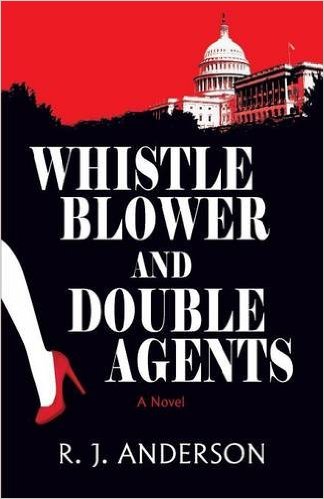
Chapter reveal: WHISTLE BLOWER AND DOUBLE AGENTS, by Ruth J. Anderson


CoverTitle
WHISTLE BLOWER AND DOUBLE AGENTS
Author: Ruth J. Anderson
Publisher: The Peppertree Press
Genre: Thriller/Espionage
Release date: July 2016
Purchase atAmazon and B&N
About the bookDuring a visit to the CIA on a safeguards inquiry,an Atomic Energy Commission nuclear scientist finds that the safeguards program of his agency was flawed and allowed for nuclear material to be stolen from within the nuclear plant and passed on to other countries.  Deeply alarmed, he reported this finding to the AEC, and later to the U.S. Congress and the President.  But when the U.S. Nuclear Regulatory Commission chairman falls in love with a beautiful female undercover CIA operative, what follows is a pulse-quickening, globe-spanning page turner that will leave readers wondering where truth ends and fiction begins—if at all…
CHAPTER 1
A loud persistent buzz of the telephone awakened Jim Miller
some time before six o’clock in the morning—a telephone used
strictly for official business. When it rang, it usually meant trouble.
His wife Nancy referred to it as the ‘hop’ line, because it was
the only time Jim moved swiftly from a lying-down position. He
preferred to waken slowly—dozing several times before greeting
the day.
“Good morning, Jim, hope I didn’t wake you,” the voice on the
other end teased.
“Good morning, Mr. President, nice of you to call and no, you
didn’t awaken me,” Jim lied.
“Lunch in my office today at noon?” The question was more of
a command than a query.
Jim Miller knew quite well, no one turned down an invitation
from the President of the United States.
“Yes, sir!” his enthusiastic answer met deaf ears as the telephone
went dead on the other end.
The brutal heat of a steamy summer day hit the black top of
the limousine like a hot torch touched to a metal instrument. Jim
turned his head slightly to observe the familiar white building to
his left as it came into view. Strangely enough, everyone referred
it as the ‘House’ even though its main purpose was business—the
business of politics. Through the ages, numerous families had
been sheltered here. Allegedly, the ghosts of many great men still
walked its halls, lingering in the darkness to observe the living.
Jim entered the White House and turned the corner leading to
the hall, which led to the Oval Office. It surprised and pleased
him to see George Keannealy standing in the doorway as if awaiting
his arrival. The tall, handsome man—young for an American
president—was exactly the same age as Jim. His laughing blue
eyes, permanently creased at the corners, complemented a wide
mouth always eager to smile. Impeccably dressed, he wore an
understated single-breasted gray suit, complemented by a dapper
white dress shirt with a striking dark rose silk tie sprinkled in a
fleur de lis pattern. His appearance bespoke of wealth and good
taste, while his boyishness depicted youth and energy.
In the deep pockets of his memories, Jim recalled how he had
first met George and his wife, Sarah, now the First Lady. Indeed,
Jim had known Sarah before George. In her late teens, she had
dated Jim’s roommate at West Point. As he thought back to those
days, he realized how indebted he was to Sarah, since she introduced
him to Nancy Forsythe, his wife. From high school on,
Nancy and Sarah had been close friends, attending the same prestigious
schools and parties.
When Jim and Nancy became seriously involved, Nancy’s ultra-
wealthy and society-conscious family opposed their engagement
at first. Her family owned a string of very fine department
stores, headquartered in New York City. Despite their ostentatious
background, Nancy did not come across as the average snobbish
debutante. Early in their courtship, she had seen in Jim the potential
to be a good husband, father, and a successful man. She
had carefully factored in her support and guidance to assure that
success. And had skillfully convinced her family he would make a
fine asset to the clan.
Although not beautiful by a model’s standard, Nancy certainly
would be considered pretty. Or perhaps ‘stylish’ would be a better
word to describe her. She wore her streaked blond hair pulled
back severely in a French twist—the fashion of the day. Ringlets,
slipping out across her delicate face, created an aura of sweet serenity.
Her good friend, Sarah, distinctly contrasted in personality
and looks to Nancy, a different breed altogether. In her early days
at Smith College, Sarah earned the name ‘party girl.’ Whenever
she could escape the confines of the staid old institution, she could
be found drinking, dancing, and sinning with the best or worst of
them. The dark-eyed, redheaded beauty had young men swarming
to her side, like honeybees to a savory hive. Her family, the
epitome of old money, handed the financial management of their
company to a slow-witted heir, who knew little about stocks and
bonds. Like all things old and neglected, the money soon began to
dry up and pass away.
Fortunately, during this financial deathwatch, Sarah approached
womanhood. Their adolescent daughter grew into a ravishing
beauty in both form and grace. In a last ditch attempt to salvage
their good name from the disgrace of poverty, the Lacroix family
gathered what was left of their substantial fortune and situated
her in one of the best schools in the country to mingle with the
wealthy and influential. Hopefully, she would find a rich husband,
one generous to a fault, who could not conceive of allowing his
wife’s family to languish in pauperism.
When Sarah married George Keannealy, it was the happiest day
of their lives. At last, her family was connected to the moneyed
gentry, if not by blood, by marriage. They hoped and prayed for
an early issue of this marriage. Children, after all, would bind the
families together once and for all.
In contrast, Jim’s family was about as middle-class as a suburban
Chicago family could be. His father had been a small town
lawyer, not particularly successful, who died from the ravages
of alcoholism when Jim was a teenager. An only child, Jim was
raised by a doting mother and grandfather. His mother worked
in a hospital as a nurse’s aide, while his grandfather, a widower,
held a minor position in the state government. He devoted his
spare time to the proper guidance and disciplining of his grandson,
whom he adored.
Growing up during the years before World War II, the young
boy became enthralled with the military. His grandfather encouraged
him. Pragmatic in his reasoning, he supported Jim’s desire
to enter the United States Military Academy at West Point, New
York. He accepted long ago that no financial way was available
for him to send his gifted grandson to an Ivy League college. West
Point would offer Jim a four-year college education, with a basic
curriculum stressing mathematics, science, and engineering.
Simultaneously, it would focus broadly on shaping his character
around the ideal of its motto—duty, honor, country. And that
pleased the old man very much. Over his mother’s protests, Jim
applied for, and was accepted into the military academy. Accepted
eagerly, considering the superiority of his grades and his outstanding
abilities on the football field. Always an overachiever, Jim excelled
at the Point, graduating second in his class.
High school and college football along with years of rigorous
training in the army, had kept Jim physically fit. Broad shoulders,
narrow hips, and muscular arms and legs fitted nicely on his 6 foot
3 body. He was more rugged looking than his friend, the president,
as a broken nose during some of his combatant situations on the
field saw to that. Nevertheless, he was polished in personality and
mannerism, and adroit in all of the formal niceties. Underneath
this diplomatic facade, however, was an aggressive nature that
could be called upon at will. Indeed, a complete change in character
and temperament could occur in precise seconds.
At the Pentagon, where he was stationed now, women found
him far more attractive than his wife could appreciate. Perhaps it
was the splendid military uniform—the high rank of a four-star
general—and the chairmanship of the Joint Chiefs of Staff, that
added to his presence.
While a great deal of Jim’s service had been abroad, where
his knowledge of several languages had been an asset to his military
career, he and Nancy had not lost track of George Keannealy
and his wife, Sarah. Indeed, whenever time and purpose allowed,
they visited each other in foreign lands or in the US, especially in
Connecticut, where George and Sarah had purchased an imposing
estate, which was linked with its own golf course, tennis courts,
swimming pool, and a small compact runway to accommodate a
private plane or helicopter.
“Lighten up! You don’t have to stand at attention here, particularly
behind closed doors. We’ve known each other far too long,
and I’m not about to be pretentious around you,” the president
chided. “And for god’s sake, call me George,” he smiled—that
wonderful smile that had ultimately won him the election. He
pointed abruptly to an overstuffed chair, upholstered in a striking
black-watch tartan. “Sit,” he said, “and let’s get down to business.”
Jim slid quickly into the comfortable chair designated for him.
Leaning forward, he eagerly anticipated what the president would
tell him, since he had not given him the slightest inkling over the
telephone. He knew it would be something important, otherwise,
George would not have asked him to the Oval Office solely for a
bite to eat.
Just as George started to speak, the door to his office swung
open, and an attractive female head announced “Lunch is here Mr.
President. Shall I send in the steward?”
“I’m famished,” replied George. “Bring it in.”
A small dark mahogany table in his office was opened to full
length and spread evenly with a crisp white-linen cloth. As the
table was set, Jim could not contain the laughter building inside
of him.
“Go ahead and laugh,” George said. “I’m still having my peanut
butter and jelly.”
Jim knew that at the president’s country estate, there had always
been peanut butter and jelly served with lunch and sometimes
breakfast. But it almost seemed bizarre to have it served
within the stateliness of the Oval Office. The meal consisted of all
the foods George liked—tuna fish salad and homemade vegetable
soup, and of course, the ever-present and important peanut butter
and jelly.
After lunch, George began to divulge what was on his mind.
“Jim, there are some openings at the Atomic Energy
Commission, and I’d like to nominate you for the chairmanship.”
His hand went to Jim’s shoulder to quiet him. “Now hear me out,”
he said firmly. “You have all the qualifications for the job. With
your background in engineering, you should be quickly confirmed
on the Hill. And, from a selfish standpoint, I also need someone I
can trust in that position.”
The president left the small dining table now; moving to the
French doors, which led to the White House residence and the
Rose Garden. The garden was in full bloom this time of year and
adorned in resplendent beauty. It was a catharsis to George and
he was often found there inhaling the peaceful quietude, particularly
during troublesome times when the burdens of the office laid
heavily upon his shoulders.
“I am flattered, George, that you would consider me for this
high position, and grateful for your trust in me,” Jim said, almost
reverently. He wondered privately, however, why he would be
pulled out of the Pentagon and moved to the AEC at a time when
disturbing forces in the Far East were becoming more and more of
a concern to peace in the world.
“That’s the key word, ‘trust’,” George said, as he continued to
stare out at the garden.
“I’ve chosen you to tackle a very grave and important problem
that has arisen in the nuclear industry. You see, there’s a nuclear
processing plant located in Axion, Pennsylvania, which has a
consistent and unexplained MUF in its accounting records … you
know what a MUF is, don’t you?” he asked.
“Yes, it stands for, Materials Unaccounted For,” Jim replied.
“That’s right,” the president interrupted, “and the MUF we are
talking about here appears to be a diversion of weapons’-grade
uranium, the kind from which you can make atomic bombs.” He
paused dramatically, and then continued, “A substantial amount is
missing from this plant. AEC officials are still checking, but I’m
told that, given the right circumstances, the amount of missing
material could equal several good-sized atomic bombs.”
“I presume the FBI and CIA are on board with this?” Jim asked.
“You can bet your sweet ass on that,” George replied, looking
at his watch. “As a matter of fact, the FBI director should be showing
up here any time. I want you to meet him.”
He turned from the garden scene before him, and walked briskly
across the red carpet etched with the great seal of the President
of the United States. He stopped abruptly when he reached his
desk, and his hand laid siege to the red authoritative telephone,
waiting there for his bidding.
“Has Herman arrived yet?” the president questioned annoyingly.
“Well, damn it, send him in,” he ordered.
The man who entered through the Oval Office portals had light
brown hair, graying at the temples, and cut very short all around.
He was obese, so when he walked, he waddled lazily like a duck
emerging from a pond. His 5 foot 7 inch frame struggled to balance
the excess poundage it was forced to carry. Thick black eyebrows,
that met in one long solid line above a small pug nose, was
as unkempt as his rumpled suit, but it was his black piercing eyes
that were the real focal point of his face.
After the usual introductions and handshakes, Herman Glover,
director of the Federal Bureau of Investigation, slowly moved his
large mound of flesh to the unfortunate sofa that would be obliged
to hold it. He slid the well-worn, government-issued briefcase
down on the floor near his feet, and waited patiently for the president
to open the meeting.
“Jim, as soon as we can get you confirmed and into your new
position, Herman will be sending you several undercover FBI
agents to work with you. However, they will be reporting directly
to him.”
Herman Glover looked straight at Jim and grinned—a grin
not unlike the proverbial grin on the Cheshire cat in Alice in
Wonderland. If only he would disappear like the cat, thought Jim,
for in his gut, he knew Glover was not a man to be trusted.